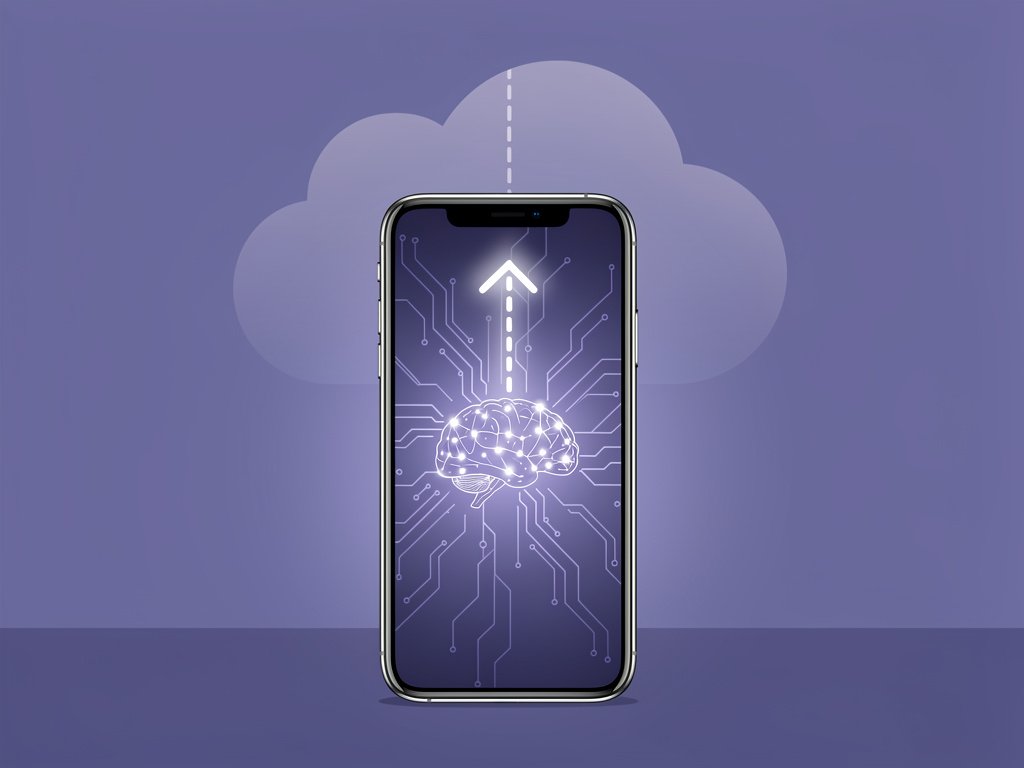
While the tech press obsesses over the latest frontier models with hundreds of billions of parameters, something far more interesting is happening on the hardware in your pocket: AI is getting small, fast, and private.
Small language models — think 1–8 billion parameters — now run comfortably on modern phones and laptops. They summarize your notes, draft your replies, and transcribe your voice, all without a single byte leaving the device.
Why on-device matters
The cloud model of AI has three structural problems, and on-device AI quietly solves all three:
- Privacy. Your messages, photos, and health data never leave your hands when inference happens locally.
- Latency. No network round-trip means responses arrive in milliseconds, not seconds.
- Cost. Local inference costs battery, not API credits. It scales with your hardware, not a company's pricing page.
The most important AI of the next decade may not be the smartest model — it'll be the one that runs where your data already lives.
The enablers
Three trends converged to make this possible. Specialized neural accelerators (NPUs) shipped in flagship chips for years before software caught up. Quantization techniques shrank models by 4–8x with minimal quality loss. And frameworks matured to the point where running a local model is an afternoon project, not a research endeavor.
What it means for you
Expect the next wave of "AI features" to be invisible: better autocorrect, real-time translation in airplane mode, photo search that doesn't upload your library. The revolution won't be announced at a keynote. It'll arrive in a software update you barely notice.
That's exactly what makes it worth paying attention to.