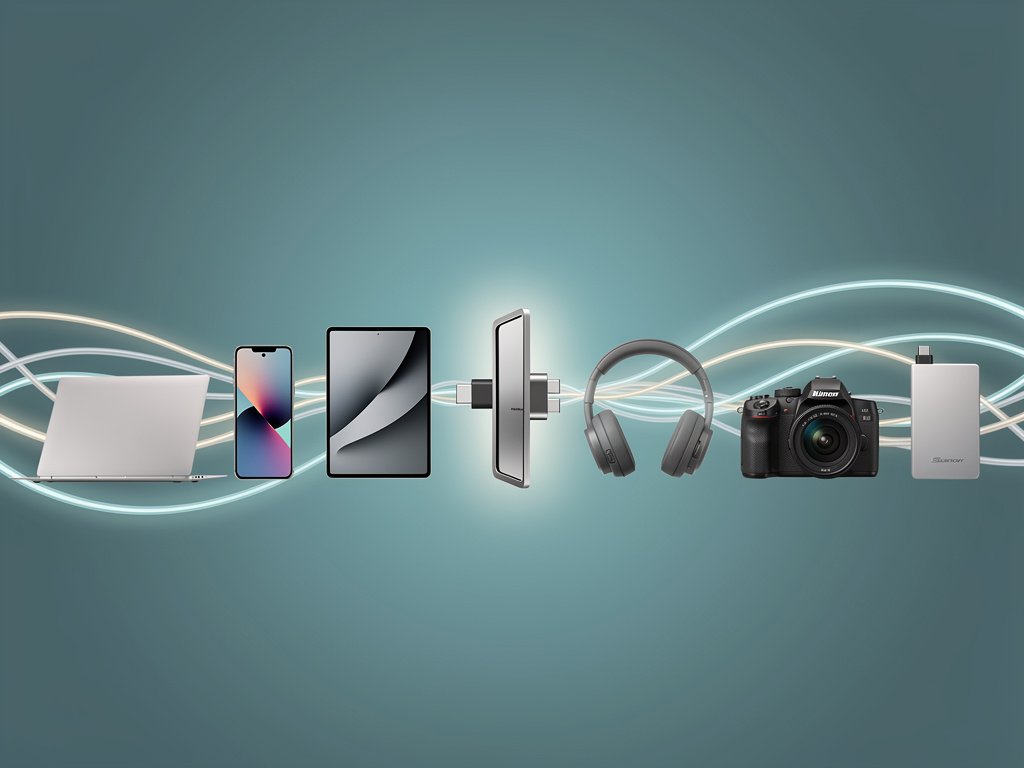
The transition is finally complete. Phones, laptops, tablets, headphones, drones, and even the stubbornest holdout accessories now speak the same connector. After two decades of drawer spaghetti, USB-C is the default.
The good: genuinely fewer cables
For most people, one charger now genuinely covers everything. A single 100W GaN brick powers a laptop, tops up a phone, and fast-charges a tablet. Travel kits have shrunk by half.
The catch: not all USB-C is equal
The connector is universal; the capability behind it is not. The same-looking port can mean anything from 15W slow charging to 240W power delivery, from USB 2.0 data speeds to Thunderbolt bandwidth.
- Charging: check the wattage, not just the shape.
- Data: a "USB-C cable" can move 480 Mbps or 80 Gbps. The label on the package is doing a lot of heavy lifting.
- Video: some ports carry dual 4K displays; others carry none at all.
The connector converged. The cables didn't. Reading the fine print matters more than ever.
What to actually buy
Our pragmatic advice: buy fewer, better cables. A certified 100W USB-C cable with EPR support and 40 Gbps data covers 95% of people. Skip the ten-pack of mystery cables — that's just re-creating the drawer problem with a new connector.
The standard won. Now the labels just need to catch up.